
Grand Theft Auto VI Elevates to Elite Tier, Mirroring Cyberpunk 2077 and The Witcher 3’s Monumental Investment and Anticipation








Popular Now
 Brawl Stars
 Gacha Club
 Grand Theft Auto V
 League of Legends
 Genshin Impact
 Rust
Rust
 Among Us
 Schedule I
 Minecraft
 Fortnite
  In the fiercely competitive and ever-evolving landscape of the entertainment software industry, certain titles transcend mere video games to become cultural phenomena, demanding unprecedented levels of investment and generating astronomical anticipation. Grand Theft Auto VI, the latest iteration from Rockstar Games, is unequivocally joining this exclusive echelon, a club previously defined by the likes of CD Projekt Red’s Cyberpunk 2077 and The Witcher 3: Wild Hunt. This designation is not merely a testament to expected sales figures or critical acclaim, but to the monumental financial outlay, intricate development cycles, and global marketing strategies that underscore their creation.
The Dawn of a New Era in AAA Gaming Investment
The development and promotional budgets for modern AAA video games have soared to dizzying heights, reflecting the increasing complexity of game design, the demand for cutting-edge graphics, and the expansive scope of player expectations. Grand Theft Auto VI is poised to shatter existing records, with industry analysts and leaked financial projections from parent company Take-Two Interactive suggesting a total investment potentially exceeding a staggering $1 to $2 billion. This unprecedented figure positions GTA VI not just as a blockbuster, but as a multi-billion dollar entertainment product designed to dominate the global market for years to come. Such an investment strategy is only viable for franchises with a proven track record of immense commercial success and an intrinsic ability to redefine industry standards.
Defining the ‘Exclusive Club’: Beyond Blockbuster Status
The ‘exclusive club’ to which GTA VI now belongs is characterized by more than just high sales. It signifies games that represent the absolute pinnacle of game development costs, innovative technology, and aggressive, global marketing spend. These are titles expected to push technological boundaries, deliver expansive open-world experiences, and become benchmarks for the entire industry. Membership in this group is contingent upon a fusion of artistic ambition, technological prowess, and a massive capital injection aimed at securing market dominance and a substantial return on investment (ROI). These titles often become significant contributors to their parent companies’ market capitalization.
Cyberpunk 2077 and The Witcher 3: Precedents of Grandeur and Peril

To understand the magnitude of GTA VI’s entry, it is crucial to examine its predecessors in this elite tier:
- Cyberpunk 2077: CD Projekt Red’s ambitious sci-fi RPG was reportedly developed with a budget exceeding $316 million (excluding marketing), a figure that cemented its place among the most expensive games ever made at the time. The immense hype generated by its comprehensive marketing campaign and the promise of a truly next-generation experience created unparalleled player expectations. Despite its initial tumultuous launch, fraught with technical issues, particularly on older generation consoles, the game demonstrated the colossal financial and reputational risks associated with such colossal investments. Its post-launch rehabilitation and subsequent critical re-evaluation underscore the long-term commitment required for mega-projects.
- The Witcher 3: Wild Hunt: This action RPG masterpiece, also from CD Projekt Red, set a new standard for open-world narrative and immersive gameplay. Its development budget was estimated around $81 million, complemented by a substantial marketing budget of approximately $35 million. At the time of its release in 2015, these figures were considered enormous, pushing the boundaries of what was financially viable for a single game. The Witcher 3’s success validated the model of large-scale, high-quality RPG development, delivering not just critical acclaim but also massive commercial success and enduring relevance, proving a substantial return on investment.
Both titles, in their own ways, demonstrated the extremities of high-stakes game development: the potential for either unprecedented success or significant initial setbacks that require sustained, costly recovery efforts.
Grand Theft Auto VI’s Unprecedented Financial Horizon
Rockstar Games and Take-Two Interactive are no strangers to monumental success, with the Grand Theft Auto franchise consistently breaking sales records. However, GTA VI represents an entirely new scale of financial commitment. The rumored development budget alone, factoring in a decade of production, thousands of developers, cutting-edge proprietary engine technology, and extensive motion capture, is expected to dwarf previous industry records. When combined with a global marketing blitz designed to ensure maximum market penetration from day one, the total expenditure becomes truly staggering.
This aggressive investment strategy signals Take-Two’s confidence in the game’s ability to generate immense long-term revenue streams through initial unit sales, potential in-game monetization (like GTA Online’s highly profitable model), and sustained engagement. It’s a calculated gamble on securing market dominance and delivering significant shareholder value for years to come.
The Economic Calculus of Mega-Game Development
Why do these games command such exorbitant budgets? The reasons are multifaceted:
- Technological Innovation: Achieving photorealistic graphics, expansive and dynamic open worlds, sophisticated AI, and seamless online functionality requires continuous investment in research and development, proprietary game engines, and high-end computing infrastructure.
- Human Capital: Thousands of highly skilled artists, programmers, writers, designers, and quality assurance testers are employed for years. The sheer scale of coordination and project management for such vast teams is a major cost driver.
- Voice Acting and Motion Capture: High-fidelity character performances require extensive voice acting talent and advanced motion capture studios, significantly contributing to production overhead.
- Global Marketing: Launching a title of this magnitude requires a multi-platform, multi-region marketing campaign spanning traditional media, digital advertising, social media engagement, and strategic partnerships. This ensures global awareness and drives pre-orders, critical for launch success.
- Quality Assurance and Localization: Ensuring a bug-free experience across multiple platforms and localizing the game for diverse international markets adds substantial costs.
These factors collectively contribute to the immense overhead, transforming these titles into intricate, multi-billion dollar projects that rival major Hollywood film productions in scope and budget.
Anticipation, Marketing, and the Global Gaming Landscape
The initial trailer for Grand Theft Auto VI became the most-watched video game reveal on YouTube within 24 hours, a clear indicator of the fervent global anticipation. This organic hype is a powerful asset, but it also necessitates an equally powerful, strategically executed marketing campaign to convert interest into sales. Rockstar Games will undoubtedly leverage social media impact, strategic partnerships, and a drip-feed of information to maintain peak interest leading up to launch. The goal is to maximize pre-orders and ensure a record-breaking launch that justifies the colossal investment.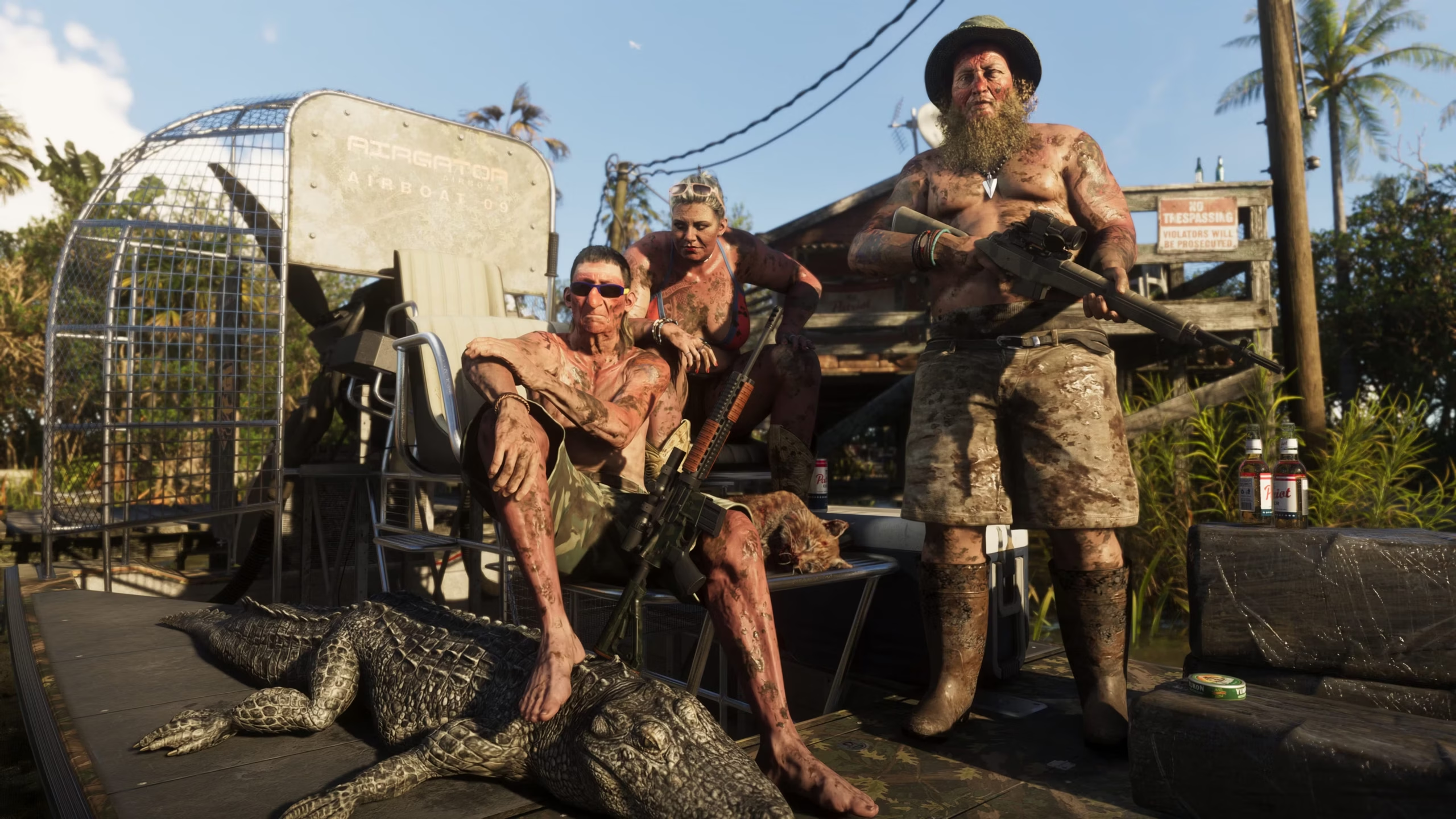
For investors, games like GTA VI represent a significant opportunity due to their potential for long-term revenue generation and their ability to capture a massive segment of the entertainment market. The digital distribution model further enhances profitability by reducing physical distribution costs and allowing for direct-to-consumer sales.
Navigating the Challenges: High Stakes, High Rewards
Despite Rockstar’s formidable track record, the stakes for GTA VI are incredibly high. The expectation for a flawless, genre-defining experience means that any significant technical issues or content controversies could lead to considerable backlash and potentially impact sales. The cautionary tale of Cyberpunk 2077’s launch serves as a stark reminder that even with an unlimited budget and immense hype, the delivery of a polished, high-performance product is paramount. Rockstar’s meticulous development process and rigorous quality assurance protocols will be under intense scrutiny, as the brand’s reputation for setting industry benchmarks is on the line.
The Future of Open-World Gaming: A New Standard?
Grand Theft Auto VI is not merely an addition to a venerated franchise; it is poised to become a defining moment for the open-world gaming genre and the entertainment software industry as a whole. Its immense budget signals a commitment to pushing the boundaries of realism, narrative depth, and player agency. The innovation embedded within its gameplay mechanics, graphical fidelity, and online ecosystem is expected to set new benchmarks that competitors will strive to emulate. This title will undoubtedly influence future gaming trends, driving further investment in immersive gameplay experiences and advanced gaming technology.
Conclusion: A Defining Moment for the Entertainment Software Industry
Grand Theft Auto VI’s ascension to an exclusive club alongside Cyberpunk 2077 and The Witcher 3 is a testament to the ever-growing ambition and financial scale of modern AAA game development. It represents a monumental investment in entertainment, a calculated gamble on innovation, and a powerful assertion of market leadership. As the gaming world eagerly awaits its launch, GTA VI stands as a symbol of the industry’s capacity to create truly immersive, culturally impactful experiences that demand billions in investment, promising a future where virtual worlds continue to redefine the landscape of global entertainment.